
Climate action where the need is greatest
Solvatten's positive effects are calculated and verified and can be used, for example, in a company's sustainability report or for private purposes. How It WorksMake a donationInvest in climate action where the need is great. Together, we can strengthen families’ and children’s health, reduce vulnerability, and decrease reliance on fossil fuels, wood, and coal.


Your Contribution Makes a Difference
Solvatten reduces wood burning by approximately 50%, which corresponds to about 6–8 trees per year.
Conservatively calculated, this means approximately 1 ton of carbon dioxide per year does not need to be burned. Solvatten also has a positive impact on several of the UN’s Sustainable Development Goals. Individuals, organizations, and companies can reduce their climate impact by investing in Solvatten’s climate projects.
A climate investment reduces and mitigates the effect of climate emissions (tCO2e). Solvatten Climate Projects is a Gold Standard Project*. Important: address emissions within your own operations first and as far as possible.
Read more about methodology and the certification here.

Partnerships Corporate Partnerships for the Climate
Among the companies partnering with Solvatten are Axfood, Ålandsbanken, Apoteket, Kleer, Adtraction, Vivagruppen, and Fraktlogistik. These partnerships demonstrate how companies from different industries can contribute to collective change.
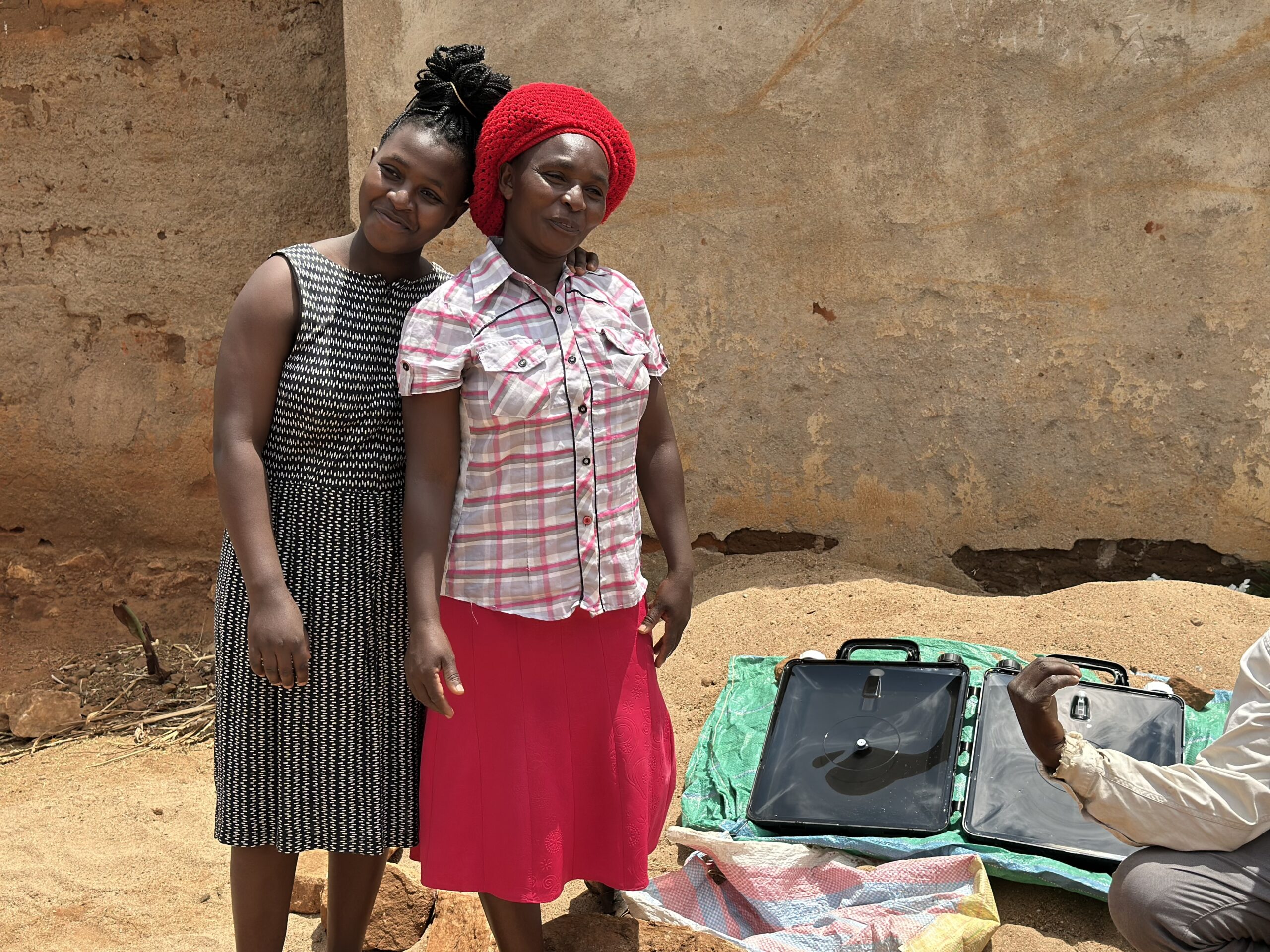
Case
Axfood and Solvatten – Climate Benefits with a Heart
Axfood and Solvatten have collaborated for many years. As early as 2014, Axfood contributed to Solvatten projects in Uganda. Since then, the commitment has created both climate benefits and concrete improvements in people’s daily lives—through better access to safe, warm water and reduced use of wood and charcoal. Axfood’s long-term support has enabled Solvatten to continue its work alongside local and international organizations, reaching more families where access to clean water and energy is limited. This is climate benefit with a heart.
Country: Uganda
Project Type: GS

Case
Apoteket Unites Climate and Health
For Apoteket, Solvatten became a way to unite two closely related issues: climate and human health. The partnership began in 2019 as part of Apoteket’s climate offsetting for transport. Apoteket’s climate initiative thus also became a concrete investment in better health—fully in line with their vision, “A Life in Health.”
Country: Uganda
Project Type: GS

Case
Kleer Links Climate Data to Action
In its 2025 sustainability report, Kleer describes both the calculation of the company’s carbon footprint and its investment in Solvatten’s climate projects in Kenya. This provides an example of how a company can combine the monitoring of its own emissions with the financing of climate action elsewhere.
Country: Kenya
Project Type: GS
Climate Action with SOLVATTEN Climate Investment – Step by Step
1. Solar Energy Saves the Climate
In many homes, wood or charcoal is required to treat and heat water. Fuel must be purchased or collected, and burning it causes emissions. Solvatten uses solar energy to perform the same task.
When the need for fuel decreases, families can save money and time. Access to clean and warm water also provides better conditions for daily hygiene. The climate benefit is linked to a change that directly benefits the households themselves.
2. Take Climate Responsibility on the Road to Net Zero
Changing energy use, transport, and supply chains takes time. During the transition, operations continue to generate emissions. While you work to reduce them, you can contribute to climate action outside your own value chain.
The Science Based Targets initiative (SBTi) guides companies in setting science-based climate targets. In the new standard, SBTi also describes how additional climate financing can be part of a voluntary program for Ongoing Emissions Responsibility (OER).
A climate contribution through Solvatten is reported separately from the company’s own emissions and progress toward climate goals. It complements the work of transforming the business.
Read more about SBTi and climate responsibility
3. Calculate your company's carbon footprint
Where do your largest emissions occur, and which measures provide the most benefit? A climate calculation provides the basis for prioritizing, setting goals, and monitoring progress. We collaborate with partners such as 2050 and Wellfish, who help companies calculate and understand their climate impact.
Calculate your company’s carbon footprint
A climate calculation shows which parts of the business and value chain generate greenhouse gas emissions. It provides a basis for decisions regarding, for example, energy, procurement, transport, and travel. When the calculation is repeated using comparable methods, you can track how measures affect emissions over time.
A common framework is the GHG Protocol. It divides a company’s emissions into three areas, known as scopes:
| Scope 1 | Direct emissions from operations, such as owned or controlled vehicles and fuels. |
| Scope 2 | Emissions from purchased electricity, heat, steam, and cooling. |
| Scope 3 | Other indirect emissions in the value chain, such as procurement, transport, business travel, and the use of sold products. |
Sources and further reading: The Swedish Environmental Protection Agency’s guidance on the GHG Protocol
The process begins by defining the scope of the business and the period to be measured. Then, data is collected on, for example, energy use, fuels, travel, and procurement. These are linked to emission factors and converted into carbon dioxide equivalents (CO₂e). Data sources, assumptions, and any gaps need to be documented so that the results can be understood and followed up.
We collaborate with partners such as 2050 and Wellfish. 2050 offers analysis and consulting in climate and sustainability work. Wellfish uses accounting data, among other things, to calculate and report climate impact according to the GHG Protocol. The choice of approach depends on your business and the data you already have.
Sources and further reading: 2050 Consulting · Wellfish
Once you know your emissions, it becomes easier to prioritize your own transition. At the same time, you can set aside a separate budget for climate action through Solvatten. The company’s emissions and the contribution to the climate project are reported separately.
4. Lead the Way to Change
Your company can help finance a change that is felt in people’s daily lives. When families gain access to Solvatten, they can use solar energy to treat and heat their water. This reduces the need to burn wood and charcoal for the same purpose. Climate work gains a concrete connection to water, health, and household finances.
Solvatten is a Swedish innovation that combines water treatment and solar heating. Through a partnership, your company contributes to more households gaining access to the technology and to the work required to introduce it and monitor its use.
Among the companies that have partnered with Solvatten are Ålandsbanken, Apoteket, Kleer, Adtraction, Axfood, Vivagruppen, and Fraktlogistik. These partnerships demonstrate how companies from different industries can contribute to collective change.
5. Start here:
We start with your company’s climate goals and what you want to contribute to. Together, we agree on:
Scope. What contribution you want to make and what it should finance.
Follow-up. What documentation and feedback are included.
Communication. How you can describe the partnership and its results to customers, employees, and other stakeholders.
Do you already have a climate calculation, or would you like to start with a conversation? Tell us about your company and your ambitions, and we will explore a plan together.
Fill in the form and we will contact you
Your Support Creates a Better Future

Social Impact

Environmental Impact

Economic Impact
Frequently Asked Questions about Climate Investments and Corporate Contributions
Can companies carbon offset through Solvatten?
Companies can finance verified emission reductions through Solvatten’s climate project. However, we recommend that this effort be communicated as a climate contribution or a complementary climate action, not as if the company’s own emissions disappear. The company should first reduce emissions from its operations and value chain as much and as quickly as possible. Solvatten’s funding is in addition to this and contributes to reduced use of wood and coal in households that need clean and warm water.
What does our company finance through Solvatten?
A company’s climate investment finances families’ access to Solvatten, allowing them to use solar energy to treat and heat water. This reduces the need to boil and heat water with wood, coal, or fossil fuels. The investment also includes local implementation and follow-up. The result is a concrete climate action that can simultaneously contribute to safer water, better hygiene, less smoke, lower fuel costs, and reduced time spent collecting wood.
How are emission reductions calculated and verified?
Emission reductions are calculated based on how much wood and other fuels Solvatten replaces compared to the situation without the project. The calculations follow Gold Standard methodology and include, among other things, usage, fuel savings, and the proportion of non-renewable biomass. Project results are reviewed by an independent third party before verified emission reductions are issued. Solvatten’s project in Kenya is registered with Gold Standard as GS11438 – Solvatten Solar Safe Water Heater Kenya.
What is the difference between carbon offsetting and climate contributions?
Carbon offsetting is often associated with the claim that emissions in one place are balanced by emission reductions elsewhere. A climate contribution, instead, means that the company finances climate benefits outside its own value chain without deducting them from the company’s own emissions. Solvatten recommends this more transparent model: report the company’s emissions and its own reductions as usual, and report support for Solvatten’s climate project separately as a complementary climate contribution.
Why should climate actions be seen as a complement to a company's own emission reductions?
Financing Solvatten’s climate project does not mean that the company’s own emissions disappear. Therefore, the most important thing is to quickly reduce emissions in one’s own operations and value chain. The Science Based Targets initiative (SBTi) describes high-quality climate contributions in Corporate Net-Zero Standard V2.0 as a complement – not a substitute – for a company’s own emission reductions. Companies can thereby take responsibility for ongoing emissions during the transition, while their own climate work continues. Read more about the SBTi Corporate Net Zero Standard here: https://sciencebasedtargets.org/corporate-net-zero-standard-v2
How can the company report and communicate its climate action?
The company can report how much climate benefit it has financed and describe the project’s social and environmental impacts. The climate contribution should be reported separately from the company’s own emissions inventory and emission targets.
Use concrete phrasing, for example: “We have financed verified emission reductions equivalent to X tons of CO₂e through Solvatten’s climate project.” Avoid broad claims such as “climate neutral,” “emission-free,” or that the company’s emissions have disappeared.
What benefits does Solvatten create beyond reduced emissions?
Solvatten combines climate benefits with access to safe and warm water. When the need for wood burning decreases, families can experience less exposure to smoke, lower fuel expenses, and reduced time spent collecting wood and preparing water. Warm water can also facilitate hygiene, cooking, and childcare. The specific impacts vary between projects and are reported based on local implementation and the follow-up conducted.
What documentation does the company receive?
The company receives documentation describing the financed climate action, the amount of verified climate benefit, and the project’s other impacts. This documentation can be used in sustainability reports, annual reports, and internal or external communication, provided that the climate contribution is kept separate from the company’s own emission reductions. The documentation and phrasing are adapted to the structure of the initiative and the verified results the company has financed.